Hiking - La ronde des 5 clochers
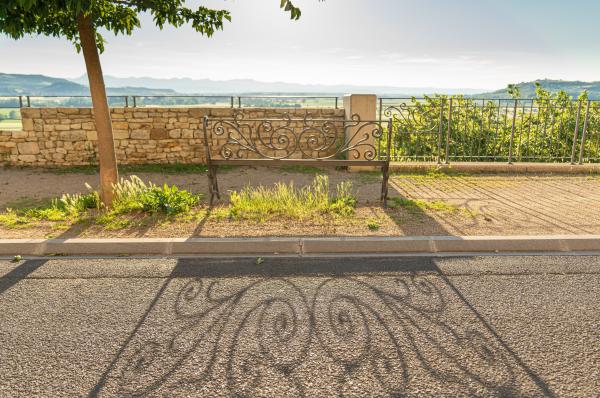
A hike to discover the religious and built rural heritage.
Traditional houses of Moissat
The cadastral plan of the early 19th century shows that many houses in Moissat were “à estre,” such as the three depicted below. Indeed, they feature external staircases, designed to protect the interior from humidity and provide access to the raised, covered living space. A second room, often used as a bedroom or attic, was located on the same level or above. At the top of the staircase, the dominant landing, overlooking the street, is charming. It could be used as a drying rack for herbs, nuts, and garden produce, and sheltered minor repairs. These houses are considered a type of “vigneronnier” house, though they lack wine-making facilities. Viticulture was not a significant tradition in Moissat, although most farmers of the 19th century had a small vineyard for personal consumption. This type of house represents the dwelling of a modest farmer, such as a day laborer or a small property owner. These houses have undergone various transformations. Road widening has resulted in the loss of several external staircases and balconies. Expansion for more space and light has led to the demolition of these older constructions. It’s a testament to the lack of cultural awareness among the owners that has contributed to the loss of these witnesses to heritage. It’s a miracle that these three houses remain largely intact.
Traditional houses of Moissat
The cadastral plan of the early 19th century shows that many houses in Moissat were “à estre,” such as the three depicted below. Indeed, they feature external staircases, designed to protect the interior from humidity and provide access to the raised, covered living space. A second room, often used as a bedroom or attic, was located on the same level or above. At the top of the staircase, the dominant landing, overlooking the street, is charming. It could be used as a drying rack for herbs, nuts, and garden produce, and sheltered minor repairs. These houses are considered a type of “vigneronnier” house, though they lack wine-making facilities. Viticulture was not a significant tradition in Moissat, although most farmers of the 19th century had a small vineyard for personal consumption. This type of house represents the dwelling of a modest farmer, such as a day laborer or a small property owner. These houses have undergone various transformations. Road widening has resulted in the loss of several external staircases and balconies. Expansion for more space and light has led to the demolition of these older constructions. It’s a testament to the lack of cultural awareness among the owners that has contributed to the loss of these witnesses to heritage. It’s a miracle that these three houses remain largely intact.