Hiking - The Morvan Walks
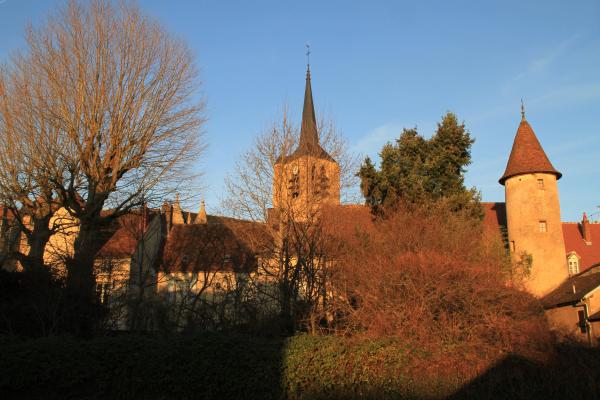
Passing through this gateway to the Morvan Regional Natural Park, set off to discover the hills of the Charolais cradle.
A stronghold of Nivernais facing Burgundy. In the 12th century, the Cluniac priory of Commagny controlled the entire region.
Its church is a gem of Romanesque art. In 1424, Philip the Good, the “Grand Duke of the West,” came here to marry Bonne of Artois, Countess of Nevers. The ruins of the “Old Castle” have
become a magical place, an invitation to daydream.
Moulins-Engilbert has always been a place of convergence. In the 1840s, 'galvachers' (migrant cattle drovers) and their teams, cattle for fattening, timber, legends, and
bold ideas descended from the Morvan. From Bazois came lime to enrich the soil, the last castings from rural blast furnaces, and distant products brought by canal.
Moulins-Engilbert is the second homeland of the Charolais cattle.
Two places to visit symbolize the success of breeding this famous race: the Charolais House and the livestock auction market.
A stronghold of Nivernais facing Burgundy. In the 12th century, the Cluniac priory of Commagny controlled the entire region.
Its church is a gem of Romanesque art. In 1424, Philip the Good, the “Grand Duke of the West,” came here to marry Bonne of Artois, Countess of Nevers. The ruins of the “Old Castle” have
become a magical place, an invitation to daydream.
Moulins-Engilbert has always been a place of convergence. In the 1840s, 'galvachers' (migrant cattle drovers) and their teams, cattle for fattening, timber, legends, and
bold ideas descended from the Morvan. From Bazois came lime to enrich the soil, the last castings from rural blast furnaces, and distant products brought by canal.
Moulins-Engilbert is the second homeland of the Charolais cattle.
Two places to visit symbolize the success of breeding this famous race: the Charolais House and the livestock auction market.